Cincoze Powers Reliable Remote Control for Military Uncrewed Surface Vessels
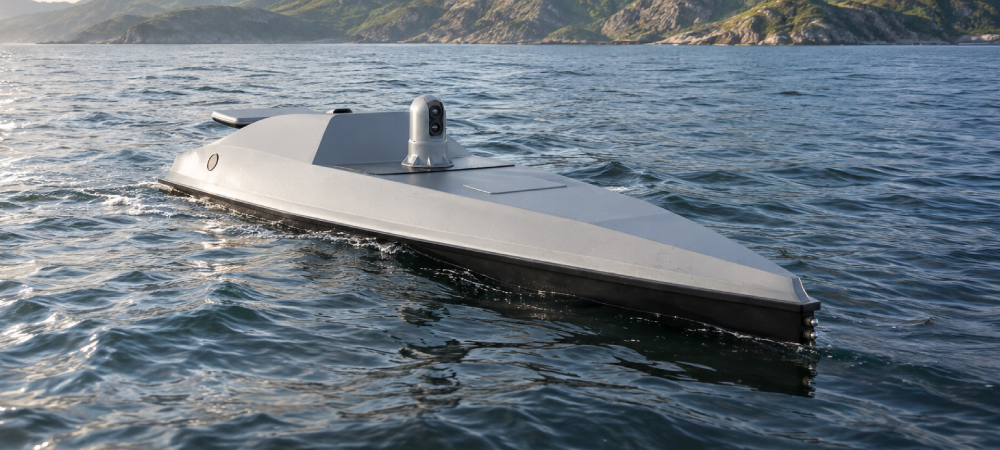
Uncrewed surface vessels (USVs) can carry out maritime missions without direct human operation and are widely used in defense and security applications. As mission requirements grow more complex, USVs need to augment their existing precision positioning and remote-control capabilities with real-time processing of onboard sensor data and steady communication with remote control stations.
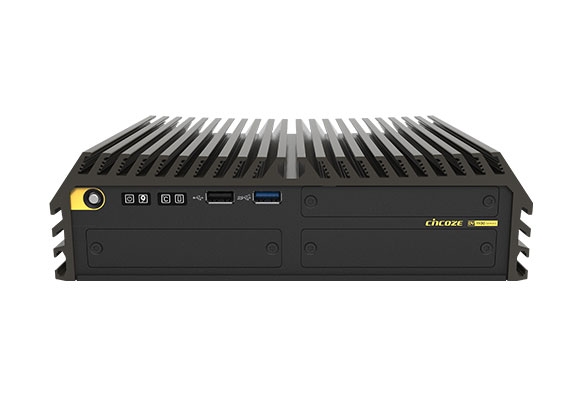
A Western European maritime technology company specializes in developing high-performance uncrewed surface vessels and integrated maritime systems for defense and security missions. One of its USVs uses the Cincoze high-performance embedded computer (DV-1000) as its onboard computing platform, supporting real-time control, sensor data processing, and system communication, with a rugged design that ensures stable operation in high-vibration, high-shock maritime environments.
Product Requirements
Real-Time Computing and Data Processing
During missions, USVs must process large volumes of data from onboard sensors in real time and quickly perform data analysis and computations. The onboard industrial computer must therefore deliver sufficient computing performance to support vessel control and diverse data-processing needs.
Reliable Positioning and Transmission
Remotely operated USVs must continuously provide vessel positioning information, integrate various onboard sensors, and transmit sensor data and system status to the shore-based control station in real time. The onboard computer must therefore support positioning, device connectivity, and network communication to ensure consistent, continuous transmission of sensor, navigation, and mission data.
Stable Operation in High-Vibration Environments
USVs operate at sea for extended periods, and onboard equipment must continuously withstand hull vibration, shock, and complex sea conditions. As the core computing platform, the industrial computer must feature a rugged, durable design that minimizes the impact of environmental factors on system stability, ensuring dependable operation throughout the mission.
Why Cincoze?
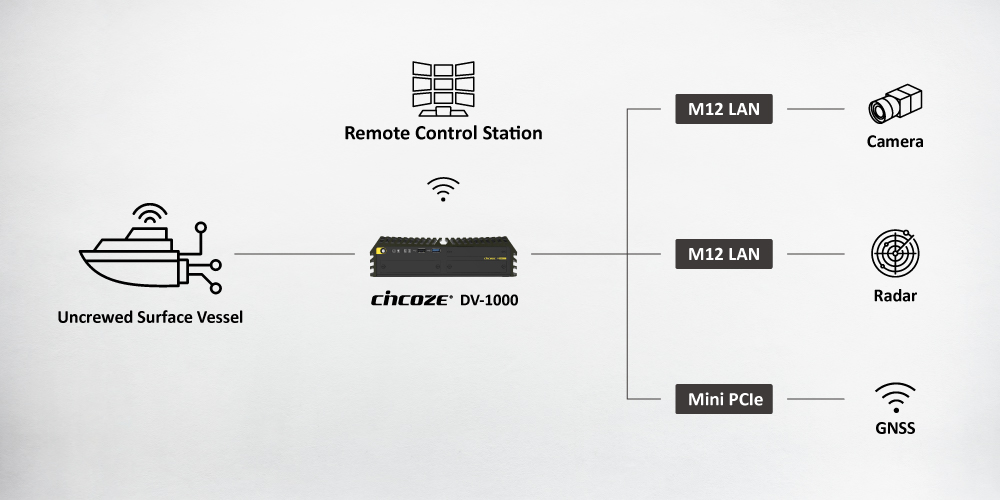
High-Performance Computing
As the onboard computing platform for the USV, the DV-1000 has a 9th/8th-Gen Intel® Coffee Lake processor that delivers ample computing performance for sensor data processing, and system computation tasks. Its high-performance computing capabilities help the USV respond quickly to process onboard system information, meeting the real-time computing and reliability demands of defense and security missions.
Versatile Communication Expansion
To meet USV onboard device connectivity, shore-side data transmission, and positioning needs, the DV-1000 offers versatile communication expansion. It has a SIM card slot and a Mini PCIe expansion slot for mobile communication and GNSS modules, supporting wireless data transmission and real-time positioning between the USV and the shore-based control station. With stable communication and positioning capabilities, the DV-1000 relays vessel position and mission data in real time, ensuring consistent remote operation and mission monitoring.
High Adaptability to Maritime Environments
The DV-1000 is ideally suited for long-term deployment in harsh maritime environments. It has a rugged design and a wide operating temperature range (-40°C to 70°C) and passes MIL-STD-810G military-grade testing, meaning it can withstand extreme vibration, shock, and temperature fluctuations during navigation at sea. Its custom M12 LAN interface provides a robust wired network connection, integrating onboard sensors and various system devices. The DV-1000 reliably supports remote control, data processing, and communication, providing a dependable computing foundation for USVs carrying out defense and security missions.
Q&A
Q1:How does the USV process onboard sensor data in real time?
A:The USV continuously collects navigation- and mission-related data via onboard sensors, which the onboard industrial computer then processes in real time. The DV-1000 is powered by a 9th/8th Gen Intel® Coffee Lake series processor, delivering ample computing performance to support sensor data processing, vessel control, and multiple system computation tasks.
Q2:How does the USV ensure stable communication between onboard devices and the remote control station?
A:The USV relies on a stable network connection to continuously transmit commands, sensor data, and onboard system information. The DV-1000 provides LAN, SIM slot, and Mini PCIe expansion slots, supporting reliable data transmission between onboard devices and meeting the communication needs between the USV and the remote control station.
Q3:How does the USV maintain stable operation in harsh maritime environments?
A:During extended voyages, USVs are subject to hull vibration, shock, and severe sea conditions, so onboard computing equipment must be rugged and durable. In addition to its wide-temperature design, the DV-1000 has passed MIL-STD-810G military-grade environmental testing and offers vibration and shock resistance, enabling it to withstand harsh maritime environments and provide a stable, reliable computing platform for USV remote control, data processing, and system communication.