
Why Wide-Temperature Operation Is Key to Industrial Computer Reliability
Unlike commercial computers used in comfortable environments, industrial computers must face the harshest frontline conditions. From outdoor cabinets and in-vehicle systems to cold chain warehouses, smelting plants, and ship engine rooms, industrial computers are often required to operate stably for extended periods in harsh environments. These settings frequently bring extreme temperature challenges. In summer, outdoor cabinets can see internal temperatures climb above 60°C due to sun exposure and heat generated during operation, while in high-latitude regions, winter nights can plunge to tens of degrees below zero — conditions that directly affect equipment stability and durability.
What Is Wide-Temperature Operation?
“Wide-temperature operation” means a system can start up normally and run stably within its labeled ambient temperature range, reducing the risk of crashes, data corruption, and malfunctions caused by high or low temperatures. Wide-temperature specifications vary by processor power consumption, thermal design, system configuration, and installation environment, with common operating ranges including 0°C to 50°C or –40°C to 70°C. Compared to general commercial or consumer computers, industrial computers are far better suited for deployment in outdoor equipment, enclosed cabinets, and industrial environments with significant temperature swings.
Before exploring wide-temperature specifications, let's review a few common terms:
Operating Temperature
The ambient temperature range within which the system can maintain normal function and stable operation while powered on.
Storage Temperature
The ambient temperature range within which the system can be safely stored while powered off and not in use.
Ambient Temperature
The actual temperature surrounding the equipment's location, used as the measurement baseline when assessing a deployment environment.
Internal Component Temperature
The actual operating temperature of components such as the CPU, GPU, SSD, and power module while the system is running. Because these components generate heat themselves, their temperatures are typically higher than the ambient temperature and are affected by factors such as workload, power consumption, thermal design, airflow, and chassis mounting.
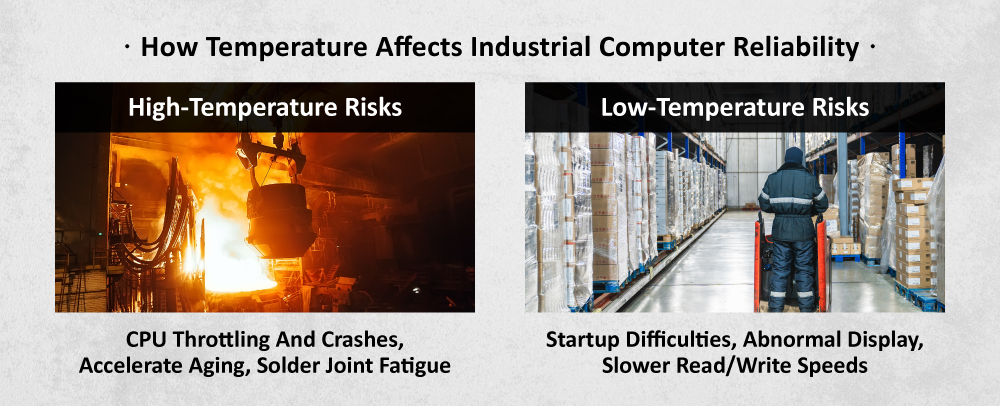
How Temperature Affects Industrial Computer Reliability
High-Temperature Risks
In high-temperature environments, the CPU and chipset can easily overheat and trigger clock throttling, or even cause the system to crash. Key components such as the SSD, RAM, and power module age faster, leading to problems such as data loss, abnormal storage read/write behavior, and unstable supply voltage. High temperatures also accelerate the oxidation of internal contacts and solder joint fatigue, increasing resistance and causing signal degradation, which, over time, undermines the system's signal integrity and operational reliability.
In recent years, as industrial computers have increasingly adopted high-performance CPUs and GPUs to support compute-intensive applications such as AI inference, image analysis, and multi-camera vision processing, overall system loads and the resulting heat output have risen significantly. If the thermal design cannot effectively handle these high-load computing scenarios, heat buildup may trigger throttling protection, preventing the system from delivering its full performance and making it difficult to meet the real-time responsiveness and high stability that industrial applications demand.
Low-Temperature Risks
Low temperatures pose challenges to industrial computers that are no less serious than high temperatures. Under extremely low temperatures, the electrical characteristics of electronic components can shift, making the system difficult to start up. When temperatures fall below a component's rated range, the SSD, memory, and power module may experience startup delays, abnormal read/write behavior, or unstable power supply. Low temperatures also gradually make materials such as the enclosure and cabling more brittle, increasing the risk of loose connectors or mechanical damage.
By contrast, industrial computers with wide-temperature design can operate reliably and stably within their specified temperature range, significantly reducing the likelihood of temperature-related failures and lowering on-site maintenance and repair costs. Even under high-load computing scenarios, wide-temperature models maintain stable performance without sacrificing computing power to ambient temperature swings, enabling truly reliable, round-the-clock deployment across the full temperature range.
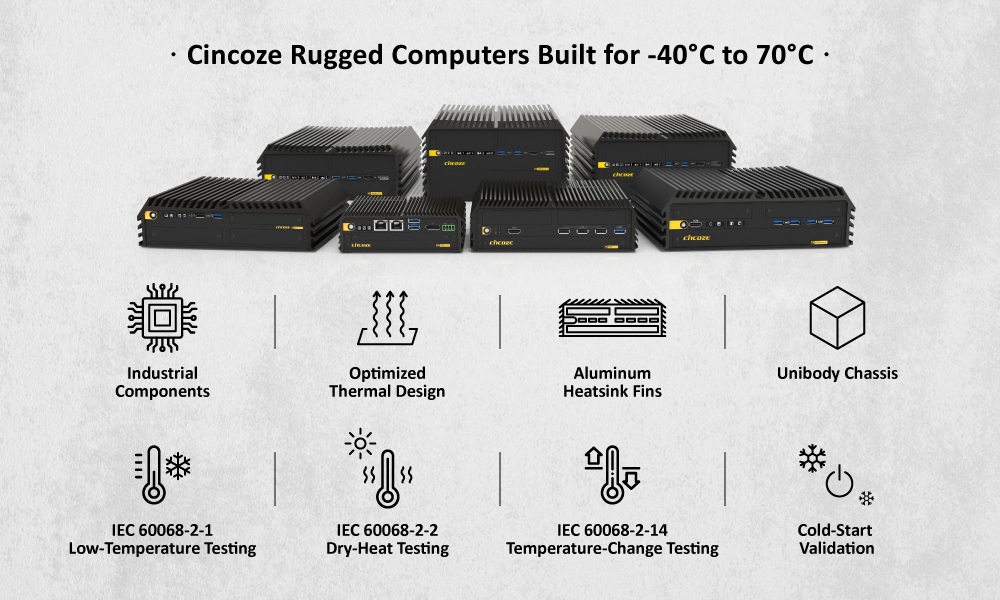
Key Elements of Wide-Temperature Capability in Industrial Computers
Wide-temperature capability doesn't depend on a single component — it requires rigorous attention to system-level design, thermal engineering, and validation at every stage to withstand real-world temperature swings. The core elements of a wide-temperature industrial computer are outlined below:
Industrial-Grade Component Selection:
Using CPUs, memory, storage devices, and passive components certified to wide-temperature specifications ensures temperature tolerance at the component level from the outset.
Fanless Thermal Design:
Choosing a fanless design reduces the risk of fan aging or failure over long-term operation. It also eliminates the fan's air intake, the entry point through which dust, moisture, and debris could otherwise enter and disrupt performance.
Heat Conduction Path Design:
This approach is the modern alternative to fan cooling. Structures such as heat sinks, fins, copper heat pipes, and extruded aluminum enclosures effectively channel heat away from the source and out of the chassis, preventing internal heat buildup.
System-Level Temperature Testing:
High- and low-temperature cycling tests are performed on the complete system, rather than individual components, to validate reliability under real-world operating conditions.
For example, Cincoze rugged embedded computers, which support wide-temperature operation from –40°C to 70°C, use industrial-grade components to reduce the risk of capacitors and other key parts expanding, leaking, or failing under extreme temperatures. A dedicated thermal configuration combining extruded aluminum heat sink fins with an integrated chassis design improves heat conduction efficiency, quickly channeling heat generated by internal components out of the chassis.
Beyond hardware design, products are also validated as complete systems against environmental test standards such as IEC 60068-2-1 (cold), IEC 60068-2-2 (dry heat), and IEC 60068-2-14 (change of temperature). For low-temperature testing, all systems must complete four cold start tests during a continuous 17-hour exposure to –40°C, confirming that the equipment can still start up normally and operate stably under extreme cold. Only through careful component selection, thermal design, and standardized system-level testing can the labeled wide-temperature specification truly reflect the system's real-world performance in harsh environments.
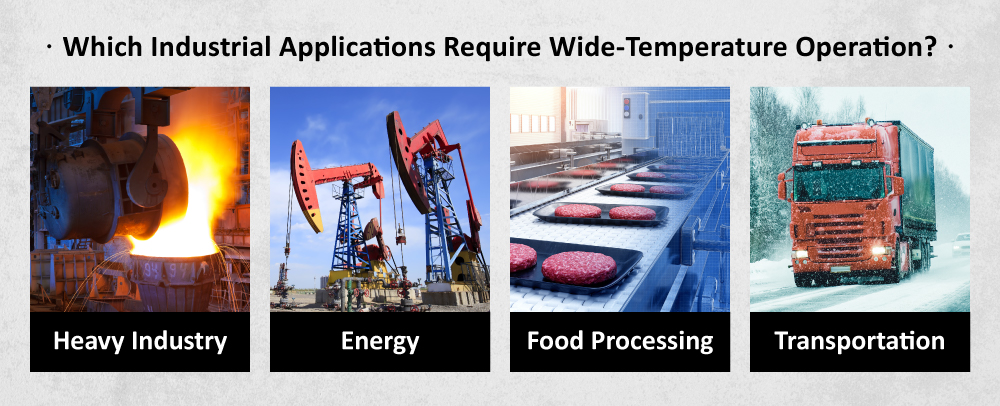
For industrial computers, wide-temperature operation is no longer a nice-to-have — it's a baseline requirement for deployment in harsh environments. Whether facing scorching heat in outdoor cabinets or the bitter cold of low-temperature storage and high-latitude regions, only industrial computers with strong wide-temperature capability can deliver truly round-the-clock, stable operation and avoid crashes, data loss, and unexpected downtime caused by temperature extremes.
Choosing a high-quality wide-temperature industrial computer significantly reduces on-site failure rates and maintenance costs, and ensures stable, efficient performance even under high-load computing scenarios.
Q&A
Q1:Why is “wide-temperature technology” important for industrial computer operation?
A:
Industrial computers are often deployed in harsh settings such as outdoor cabinets, vehicles, cold chain warehouses, and smelting plants, where they must withstand extreme conditions ranging from summer highs above 60°C to winter lows of tens of degrees below zero. Only with wide-temperature technology can equipment maintain stable, long-term operation without failing due to temperature extremes.
Q2:What is wide-temperature operation?
A:
Wide-temperature operation means that when operating within its specified temperature range (typically –40°C to +70°C), the complete system maintains stable performance and reliability, without throttling, crashes, or data corruption. It's a guarantee of overall platform stability — not simply the temperature tolerance of a single component.
Q3:How does temperature affect industrial computer reliability?
A:
High temperatures cause CPU throttling and crashes, accelerate aging of the SSD, RAM, and power module, and worsen contact oxidation and solder joint fatigue, affecting signal integrity — high-load computing further accelerates heat buildup. Low temperatures can cause startup difficulties, abnormal LCD display, slower storage read/write speeds, unstable power supply, and material embrittlement leading to mechanical damage. Both temperature extremes pose serious long-term threats to system reliability.
Q4:What are the benefits of wide-temperature capability in industrial computers?
A:
Industrial computers with wide-temperature design operate stably within their specified temperature range, significantly reducing the likelihood of temperature-related failures and thereby lowering on-site maintenance and repair costs. They also maintain stable performance output even under high-load computing, enabling reliable, round-the-clock deployment across the full temperature range.
Q5:What are the key elements that give industrial computers wide-temperature capability?
A:
The core elements of a wide-temperature industrial computer include: industrial-grade components certified to wide-temperature specifications, fanless thermal design, heat conduction path design using structures such as heat sinks and copper heat pipes, a wide-voltage power design to handle voltage fluctuations, and system-level high/low temperature cycling test validation.