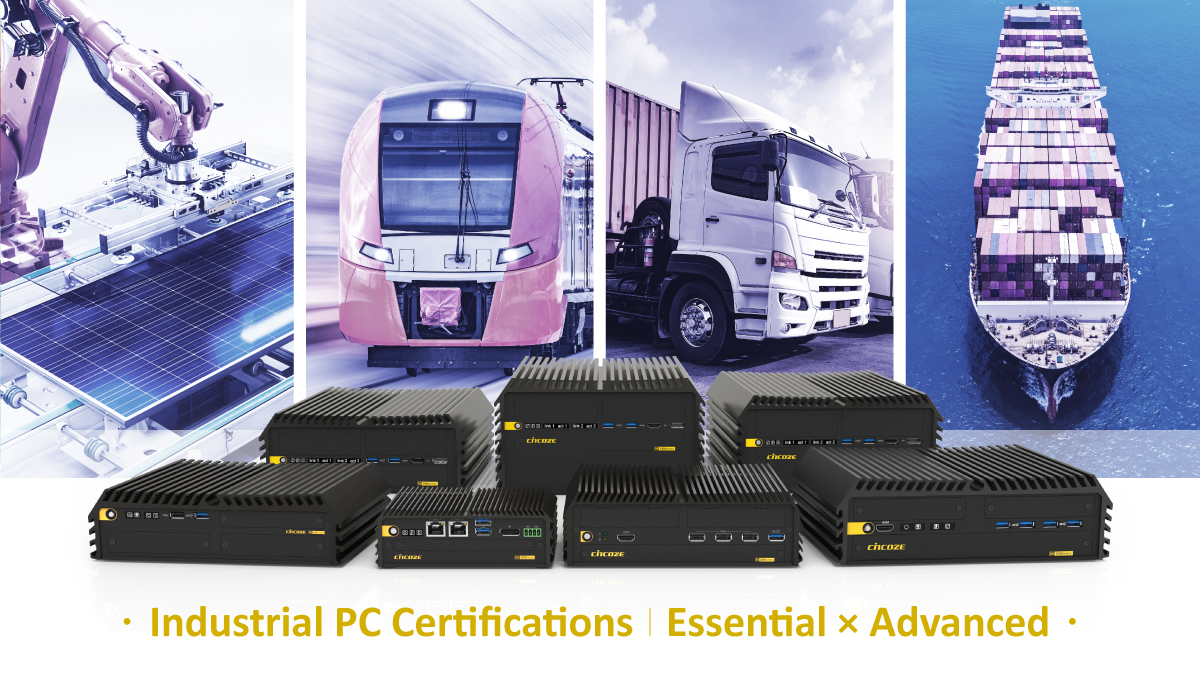
Comprehensive Guide to Industrial Computer Certifications
Certifications, rather than performance, are the first consideration for industrial computers deployed across a range of market verticals. International standards and industry certifications represent the strongest validation that equipment will operate reliably over extended periods of time in harsh environments. This article provides an overview of basic and advanced international certifications for industrial computers across various vertical markets, enabling more accurate feasibility assessments through product deployment or system design stages.
Basic Certifications: The Common Language for Global Markets
Before pursuing industry-specific certifications, industrial computers must first pass these certifications to ensure compliance with basic safety and electromagnetic compatibility (EMC) requirements for electronic and electrical products. The most representative of these are CE for the European market and FCC for North America. Although they are regional, many countries use these standards as a reference point for their local requirements, sometimes with additional local additions.
CE
CE (Conformité Européenne) is a requirement for electronic and electrical products to enter the European Union market. It signifies that products comply with EU regulations, such as safety and EMC standards, during the design and manufacturing phases.
FCC
The United States FCC (Federal Communications Commission), primarily regulates the radiofrequency (RF) radiation and electromagnetic interference (EMI) levels generated during the operation of electronic and communications equipment. Any product sold in the US market that may generate RF energy, such as computers, communications equipment, or industrial controllers, must comply with applicable FCC technical specifications.
Advanced Industry Certifications: Stricter Requirements for Specific Vertical Markets
CE and FCC compliance are typically the bare minimum. Systems integrators and end-users place greater emphasis on industry-specific certifications. These certifications address the unique environmental and operational requirements of each sector, often becoming critical factors in project implementation.
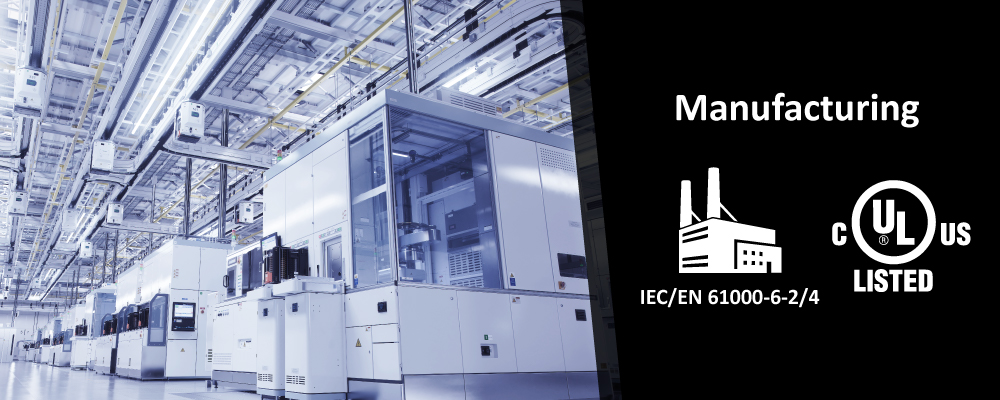
Manufacturing
In manufacturing, industrial computers are typically installed in production line equipment, control cabinets, or machine housings, where they must continuously operate and execute application tasks in complex EMI environments. Consequently, electromagnetic stability and product safety are critical selection criteria, with the IEC/EN 61000 series and UL certification being the most representative standards.
IEC/EN 61000-6-2/4
IEC/EN 61000 is the EMC standard for industrial environments, covering emissions and immunity testing, including ESD, EFT, Surge, radiated immunity, and conducted immunity parameters. Its immunity requirements are significantly more stringent than CE EMC standards. For example, IEC 61000-6-2 raises RS from 3 V/m to 10 V/m and CS from 3 V to 10 V, ensuring stable equipment operation in high-EMI environments.
UL
UL (Underwriters Laboratories) is a prominent safety certification standard in North America and is widely adopted globally. Unlike CE and FCC, which rely primarily on self-declaration, UL certification requires independent laboratory testing and subsequent factory audits to ensure that mass-produced products continue to meet safety standards. UL certification for industrial computers validates electrical design, insulation, fire resistance, and other critical design aspects through third-party verification. This rigorous testing prevents potential hazards by ensuring that the equipment remains compliant with safety regulations even under conditions such as overheating, short circuits, or abnormal loads.
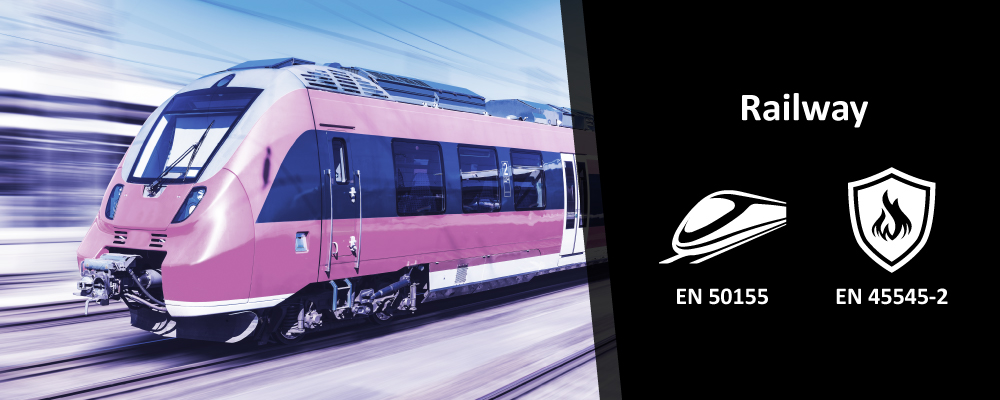
Railways
In railway applications, industrial computers are typically installed in carriages, electrical enclosures, or equipment compartments. They must endure prolonged vibration, shock, and power fluctuations, while also meeting fire safety requirements to protect passengers. EN 50155 and EN 45545-2 are the two critical standards in this domain.
EN 50155
EN 50155, established by CENELEC (European Committee for Electrotechnical Standardization), is the standard for electronic and control equipment in rail vehicles and serves as a crucial threshold for industrial computers entering the railway market. This standard addresses the train operating environment by requiring equipment to withstand wide temperature ranges (short-term peaks up to 85°C), high humidity and condensation, and to pass IEC 61373 vibration and shock tests, while maintaining stable operation under conditions such as power sags, surges, and interruptions. Regarding EMC, industrial computers must comply with EN 50121-3-2, which imposes stricter immunity requirements than CE EMC standards, such as increases of ESD from 4 kV to 6 kV, EFT from 1 kV to 2 kV, and RS from 3 V/m to 20 V/m.
EN 45545-2
EN 45545-2 is the core European standard for fire resistance of materials and components in rail applications. Its purpose is to reduce flame spread, smoke density, and toxic gas generation during fires, protecting passengers and personnel. The standard categorizes materials into classifications R1 through R28 based on their intended use, and divides fire hazard levels into levels HL1 to HL3 based on flammability, smoke, and toxicity test results, with HL3 representing the most stringent standard typically applied to tunnels or high-risk routes. Industrial computers installed within passenger compartments or accessible areas must have materials complying with relevant requirements such as R24, R25, or R26.
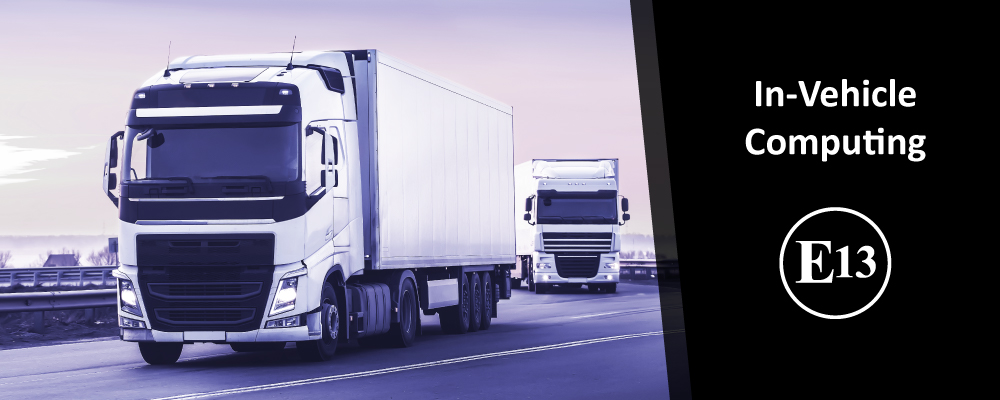
In-vehicle Computing
In-vehicle industrial computers are typically installed in commercial trucks, buses, and special-purpose vehicles, where they must withstand vibration, temperature variations, and power fluctuations. EMC is particularly critical in this context. Equipment must avoid interfering with vehicle electronic systems and demonstrate strong EMI. Europe's E-mark provides the most comprehensive framework for regulating the EMC performance of automotive electronics and has become a requirement for most systems integrators.
E-mark
E-mark is a conformity mark for vehicle components and on-board electronic equipment established by the United Nations Economic Commission for Europe (UNECE) and EU regulations, ensuring equipment meets European market EMC requirements. The numbers in the mark indicate the country of issuance (e.g., E1 for Germany, E4 for the Netherlands). Testing focuses on electromagnetic emissions and immunity capabilities, including radiated emissions, radiated immunity, bulk current injection (BCI), stripline immunity, and power transient testing, to verify the equipment's stable operation in automotive electromagnetic environments.
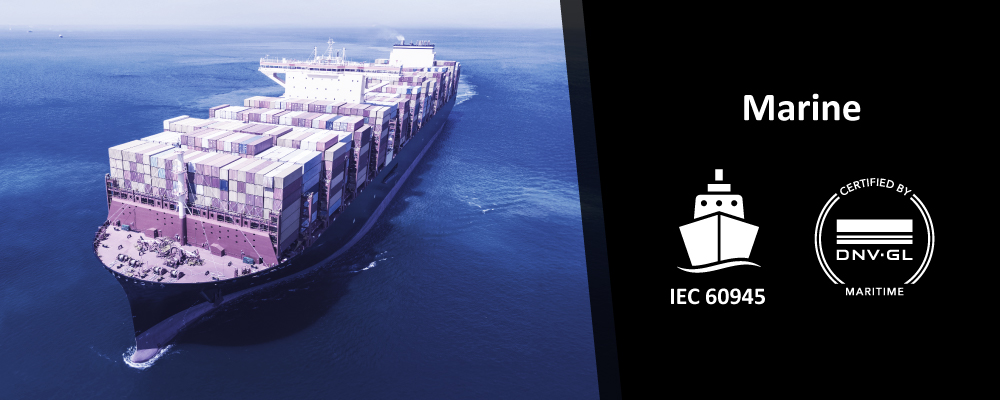
Marine
Industrial computers in marine applications are typically deployed in ship bridges, engine rooms, and navigation systems, where they must endure prolonged exposure to high salinity and humidity, intense vibration, and temperature fluctuations, while also contending with EMI from navigation radar, communication antennas, and high-power machinery. The IEC 60945 marine electronics equipment standard and DNV classification certification are the two most prominent international standards in this domain.
IEC 60945
IEC 60945 is the core environmental and EMC standard for evaluating the reliability and safety of marine equipment in ship navigation and communication systems, established by the International Electrotechnical Commission (IEC). EMC specifications for industrial computers require RS of at least 10 V/m, and radiated emission (RE) must comply with EMI limits across all frequency ranges, with stricter control requirements for critical communication bands such as VHF. The standard also encompasses maritime-specific environmental testing, including salt fog corrosion, high-humidity condensation, vibration and shock, and waterproof/dustproof testing, to ensure stable equipment operation in maritime environments.
DNV
DNV is a globally recognized classification society and third-party verification organization that serves as a critical benchmark for the quality and reliability of marine equipment. Its testing covers vibration and shock, wide-temperature operation, high-humidity condensation, salt-fog corrosion, EMI, and power quality under key conditions, while also requiring that the equipment possess sufficient mechanical strength to withstand structural loads generated during prolonged ship operation. The principal distinction from IEC 60945 is that DNV extends beyond individual product testing and performance requirements to function as part of a comprehensive ship classification system that emphasizes long-term reliability of equipment within the integrated ship system, installation conditions, and operational validation. This typically involves documentation review, type approval, and factory audits, making it a crucial certification for marine equipment entering the market.
Q&A
Q1:Why do industrial computers need specific certifications for different vertical markets?
A:
Industrial computers need multiple vertical market certifications to ensure they meet critical minimum requirements across various industries and markets, validating that products can adapt to different application environments. By meeting relevant standards and passing required tests, companies can reduce risks during system deployment and operation, while also improving equipment long-term reliability and stability.
Q2:What certifications do industrial computers require in the manufacturing sector?
A:
In manufacturing environments, industrial computers must comply with CE and FCC, and place emphasis on electromagnetic stability and product safety. Meeting industrial environment EMC standards (IEC/EN 61000-6-2/4) ensures equipment operates reliably in high EMI conditions. Obtaining UL safety certification further enhances product safety, making these two certifications the most important in the manufacturing sector.
Q3:What industrial computer certifications are required for railway applications?
A:
In railway applications, key industrial computer certifications include EN 50155 (rail vehicle electronic equipment standard), EN 50121-3-2 (EMC), and EN 45545-2 (fire safety). These standards ensure equipment maintains stable and reliable operation under conditions involving vibration, temperature variations, and stringent safety requirements.
Q4:What certifications do industrial computers require for in-vehicle applications?
A:
In-vehicle industrial computers must contend with power fluctuations, continuous vibration during operation, and EMI, so EMC is a critical requirement. E-mark provides the most comprehensive framework for EMC in automotive electronics and serves as an important reference point for most systems integrators when selecting components.
Q5:Why do marine industrial computers require DNV certification?
A:
Marine environments present challenges, including high salinity and humidity, vibration, temperature variations, and EMI. Key industrial computer certifications include IEC 60945 (marine equipment standard) and DNV classification. The former ensures equipment capability under EMC and environmental testing conditions, while the latter validates product reliability and safety under extended navigation and structural loading, ensuring equipment meets the actual operational requirements of the maritime environment.